Hotel SEO: The Ultimate Guide to Driving Direct Bookings in 2026

Lexi DeMers
09 Dec 2025
Updated: 06 Apr 2026
Guests are searching for their next stay online. And, if your hotel isn’t showing up at the top of the page, you’re losing bookings to competitors and OTAs.
This is why hotels can’t afford to overlook SEO. A strong hotel SEO strategy helps your property rank higher on Google and other search engines. As a result, you attract more website traffic, leading to more direct bookings. In this guide, we’ll cover hotel SEO essentials to maximize your visibility to potential guests.
What Is Hotel SEO?
Hotel SEO, or hotel search engine optimization, is the process of optimizing your hotel’s website so that it appears higher in the relevant search results. It focuses on improving performance for key terms like “hotels in [your city]”.
With this, guests can easily find your accommodation and, with direct bookings, you save on paying high OTA commissions.
Why Is Your Hotel’s SEO Strategy Important?
Most travelers begin their journey with a Google search: “best hotels in Berlin”. But if your hotel has weak SEO, it won’t appear on the first page of results. Potential guests will likely book elsewhere or may only find your property on an OTA, costing you a significant commission.
Key Elements of a Successful Hotel SEO Strategy
A strong strategy combines technical performance, local optimization, and content that converts. Let’s dive into these and more. Below are the core elements every hotel should prioritize to boost visibility, attract the right guests, and drive direct bookings.
Keyword Research for Hotels
SEO keywords are the terms that travelers may use when looking for businesses like yours. When it comes to SEO for the hotel industry, these include queries like “hotels in [city]”, “hotels near [attraction]”, and “best boutique hotels in [destination].”
Tools like Google Keyword Planner, Ahrefs, and SEMrush can help you uncover the phrases that are searched for most often. You’ll want to consider each term's search volume, keyword difficulty, and user intent to determine if it is worth targeting.
Broad vs Long-Tail Keywords
When mapping out your hotel SEO keyword strategy, you want to include a mix of both broad and long-tail keywords. But before you can build an effective strategy, understanding the difference between the two is key.
Broad keywords are typically shorter, more general terms. In SEO for the hotel industry, broad keywords would include queries like “resorts in Bali” or “hotels in Tuscany.” They attract a large audience but are also more competitive.
Long-tail keywords, on the other hand, are more specific and often longer phrases. Targets such as “family-friendly surf resort in Bali” or “eco-luxury hotel near San Jose” are long-tail hotel keywords. These terms have lower search volume but higher intent, meaning travelers searching for them are closer to making a booking.
Best Practice: Use a balanced mix of both. Broad keywords build visibility, while long-tail keywords capture qualified traffic ready to convert.
On-Page SEO for Hotel Websites
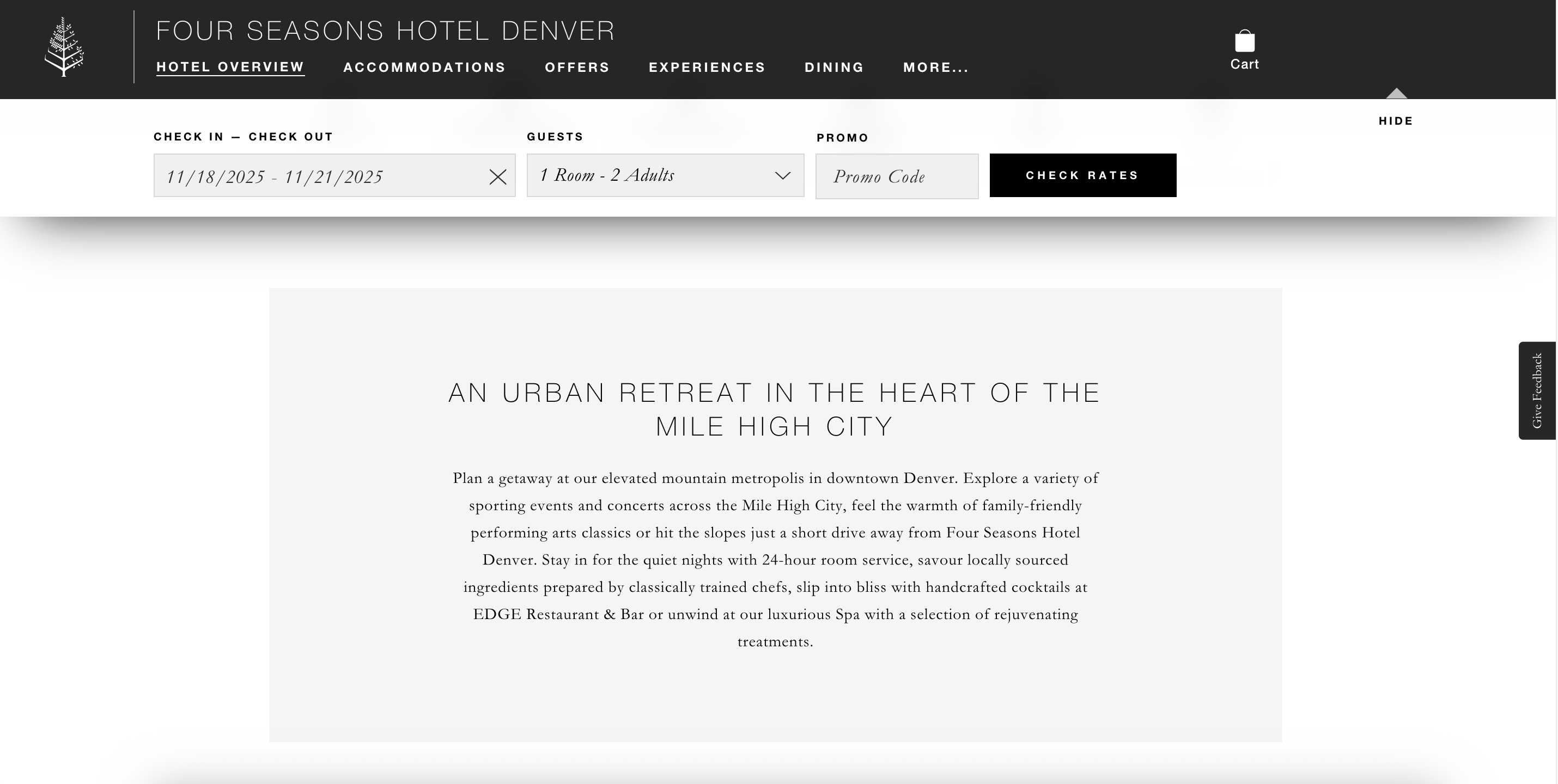 Don't miss opportunities to showcase and promote the area you serve.
On-Page SEO for hotels is all about optimizing the content your guests actually see on your site. The main goal is to ensure it speaks to both travelers and search engines.
To do this, naturally work in the key terms that guests might use to find your place. For example, your homepage might target “boutique hotel in Sayulita,” while your amenities page focuses on “surf retreats in Mexico.” Use these keywords in your page title, headings, meta description, and body copy to maximize on-page SEO efforts.
It’s All About the User Experience
Your content should be clear, helpful, and genuinely useful to your ideal guest. That means doing more than just listing features and ad hoc keywords.
You want to speak about the benefits and experiences while implementing the language your guests will use to find you. Instead of “We offer airport transfers,” try “Start your stay stress-free with our private [destination] airport pickup.”
Also, ensure that every page has a clear hierarchy (H1, H2, H3s), and include internal links to related pages for the best search optimization and guest experience.
Local SEO Optimization
Making a concerted effort in local SEO is the best way to ensure you show up when guests search for places to stay nearby. If your accommodation is in Chiang Mai, it isn’t helpful to appear in a hotel search in Bangkok.
One key step in good local SEO for hotels is to claim and optimize your Google Business Profile. Make sure your name, address, and phone number are consistent across your website and all other listings. Add relevant categories, high-quality photos, and keep your hours and details up to date.
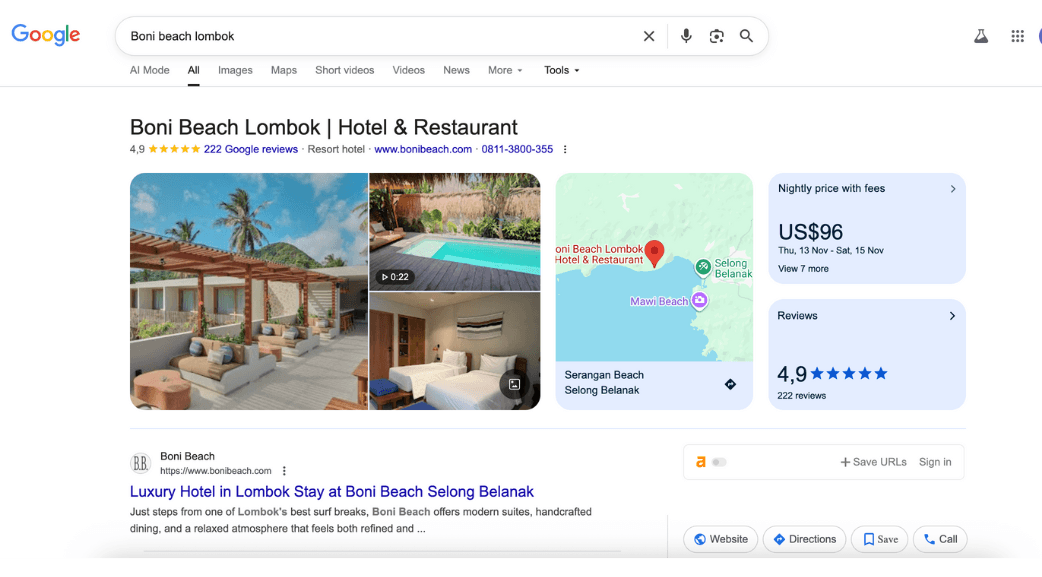
Guest reviews also play a big role in local rankings. Encourage happy guests to leave a review on Google after their stay. And always reply, whether it’s a thank you or a thoughtful response to feedback.
To take your local SEO a step further, you can create content around local attractions, events, and experiences. Blog posts or landing pages about “things to do near [your hotel]” help you show up in local searches while positioning your property as a helpful guide.
Content Marketing in the Hotel Industry
Great SEO isn’t just about keywords and page speed. It’s about creating content that helps travelers discover your hotel before they even know they’re looking. That’s where content marketing comes in.
By posting helpful, relevant, and destination-focused content, you can attract potential guests organically. Think blog posts like:
“Best surf spots near [your location]”
“3-day itinerary for couples in [your city]”
“What to pack for your [seasonal] trip to [destination]”
This kind of content improves your keyword visibility and positions your hotel as an expert in the area. And when it’s time to book, your brand is already top of mind.
Even better, well-written content is shareable. It can naturally earn backlinks, be picked up by local tourism boards, and get shared on social media. All of which can boost your hotel SEO performance.
Technical SEO Targets
Technical SEO is the behind-the-scenes work that makes your website easier to crawl, index, and rank. Without strong technical foundations, even the best content and keywords won’t reach their full potential.
When it comes to technical SEO for the hotel industry, start with site speed. Hotel sites are often very image heavy, which can lead to slow loading times. But guests won’t wait around for a slow site to load, and neither will search engines. Compress images, use caching, and minimize unnecessary code to improve load times.
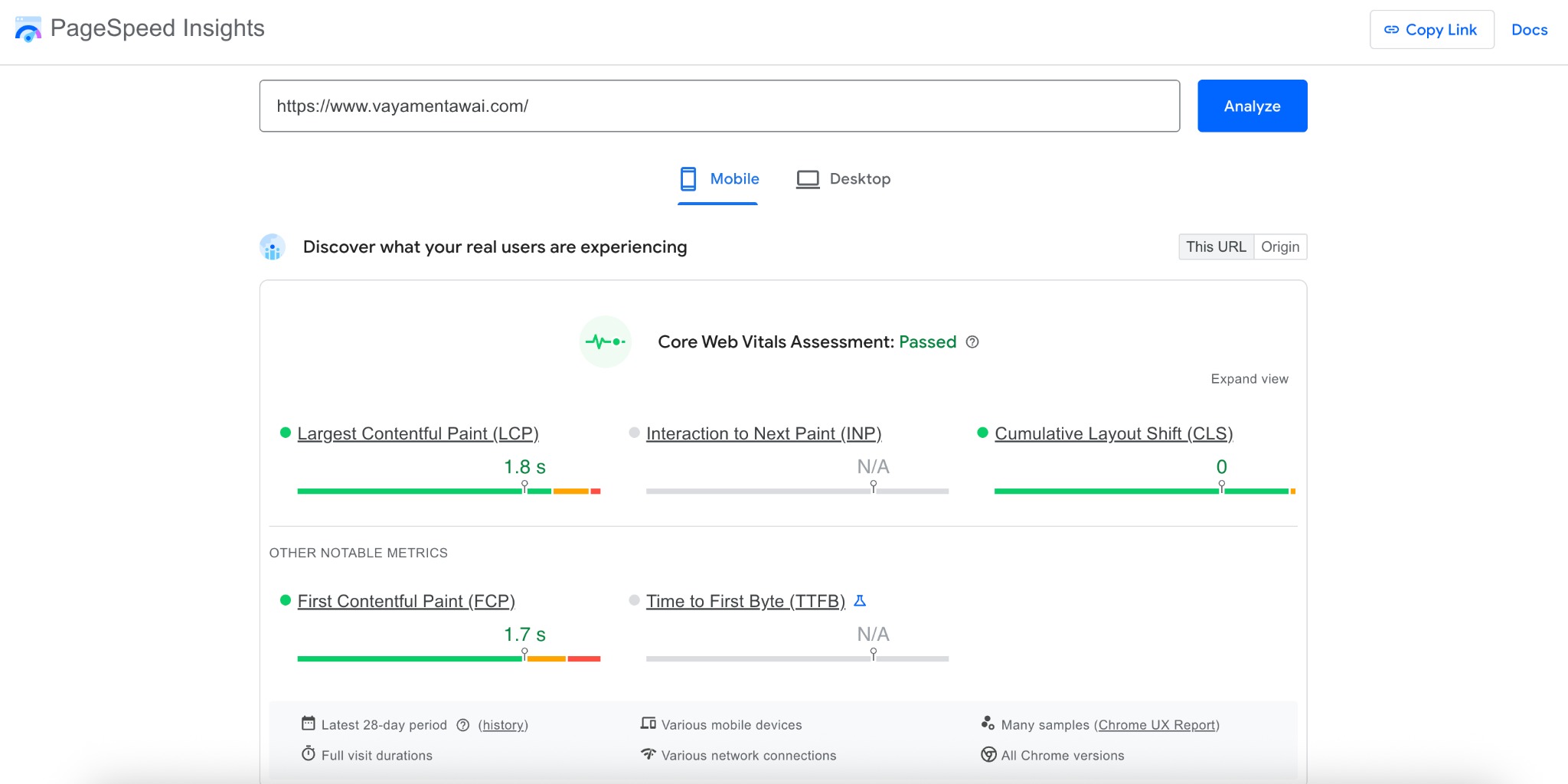 Fast loading times improve rankings and your user experience.
Next, ensure your site is mobile-friendly. In 2023, almost half of travelers used their phones to research travel. So it’s important that your site adapts smoothly across devices to provide an optimum user experience.
A clear, crawlable site structure is also key. Use a logical hierarchy of pages and submit an XML sitemap to Google Search Console. Avoid broken links, duplicate content, and messy redirects that confuse search engines.
Finally, use schema markup to help search engines better understand your content. Structured data like hotel amenities, reviews, and pricing can improve how your listings appear in search results—sometimes with rich snippets that boost clicks.
Tip: Technical SEO is, well, technical. A lot of the action items in this section may fall outside the wheelhouse of the typical hotelier or accommodation manager. But that doesn’t mean you should just skip these points.
There are long lists of freelancers on sites like Fiverr that can help business owners with technical components, oftentimes for very affordable rates. Which is well worth the investment, considering the impact of technical SEO on hotel sites.
Link Building for Hotels
Backlinks are links from other websites to yours, and they are a major ranking factor in SEO. For hotels, quality link building helps establish authority, boost visibility, and drive traffic from relevant travel, tourism, and local content sources.
But not all links are created equal. Focus on earning backlinks from sites that are trustworthy and relevant to your audience. Having many links from low-quality and irrelevant sites back to your hotel’s webpages can actually hurt your overall SEO performance.
How to Build Links for Your Hotel
To start building backlinks for your hotel, you can cultivate local partnerships. Reach out to nearby activity providers or tourism boards and ask them to include a link to your site in their “where to stay” or “local partner” section of their websites. You can also return the favor and link back to them as well.
You can also gain backlinks by guest posting or running PR campaigns for travel blogs or local lifestyle outlets. For this method, you will need to pitch a unique angle; a new sustainability initiative or a renovation project could be newsworthy enough to land you backlinks from trusted sources.
Lastly, you can also submit your hotel to high-quality directories and travel platforms. Sites like Lonely Planet, Culture Trip, and regional tourism sites often allow listings with backlinks.
Tip: The key to link building is consistency. One or two great links won’t change your SEO overnight, but a steady stream of relevant backlinks will increase your site’s authority over time.
Common Hotel SEO Mistakes to Avoid
Even with the best intentions, it’s easy to make a few missteps that hold your hotel website back from ranking. Here are some of the most common SEO mistakes in the hospitality industry and how to avoid them.
Keyword stuffing. Trying to rank by repeating the same phrase too often makes your content awkward and hard to read. Instead, aim for natural phrasing and sprinkle in variations of your target keywords.
No local optimization. If your content doesn’t clearly indicate your location or include local keywords, you’re missing out on one of the most valuable SEO opportunities for hotels. Prioritize “near me” searches and geographic relevance.
Ignoring mobile design. Most hotel searches and bookings happen on mobile. If your site isn’t responsive, loads poorly on phones, or has hard-to-use navigation, you’re losing guests and ranking opportunities.
Missed content opportunities. Publishing only a few static pages limits your visibility. Use blogs, FAQs, and destination guides to target more keywords and become a trusted resource for travelers.
Slow page speeds. A beautiful but sluggish website will hurt your SEO and frustrate users. Optimize image sizes, reduce unnecessary scripts, and keep load times under three seconds where possible.
Advanced Hotel SEO Tips for 2025

It’s wise to first focus on the basics. But if you are ready to take your Hotel SEO game to the next level, you can start thinking about these next steps.
Target featured snippets and zero-click searches. Google continues to prioritize direct answers in search results. To improve your chances of appearing in featured snippets, structure some of your content with clear headings, bullet points, and FAQ-style answers. Aim to answer guest questions in under 50 words.
Prioritize image SEO and visual search. Hotels are a highly visual product, and image optimization is often overlooked. Use descriptive file names (e.g., ocean-view-suite-bali.jpg), include alt text, compress images for faster load times, and submit image sitemaps. Tools like Google Lens are making visual discovery more common. And optimized images can be a powerful discovery channel.
Embrace AI-driven search. AI-powered search is changing how travelers plan their trips. Focus on creating helpful, well-structured content that’s easy for both guests and algorithms to understand. Prioritize content that’s helpful, conversational, and formatted well.
How to Measure Performance in SEO for Hotels
Organic traffic. One key metric to track is how many users are coming to your site from search engines. You can use Google Analytics to view your total organic traffic over time. If it’s growing steadily, it’s a sign your hotel’s SEO strategy is working.
Keyword rankings. You can use tools like Ahrefs, Semrush, or Google Search Console to monitor how your site ranks for target keywords. Track improvements in position for the key search queries that matter most for your business.
Click-through rate (CTR). A high ranking means little if no one’s clicking. Keep an eye on your CTR in Google Search Console. Low CTRs could mean your meta titles and descriptions need improvement to better attract curious travelers.
Conversions and bookings. The ultimate goal of hotel SEO isn’t just traffic, it’s bookings. Set up conversion tracking in your analytics tool to see how many site visitors complete a reservation, fill out a form, or take other key actions. This helps you tie SEO efforts directly to revenue.
From Search to Stay: Convert Guests with Bookinglayer
A solid hotel SEO strategy will help more travelers find your property online. But that’s just the beginning. Getting people to your website is only half the battle. To turn website visitors into bookers, you need to offer a smooth booking experience.
That’s where Bookinglayer comes in. Our all-in-one system gives you more than just backoffice automation. With a fully customizable booking flow, hands-free upselling, and trustworthy payment integrations, you’ll convert more site visitors into confirmed guests.
Combine great SEO with an optimized booking experience, and you’re setting your business up for long-term growth. Learn more about how Bookinglayer can help you do bookings better. Schedule a no-strings demo call today to see how you can save time and boost revenue for your hospitality business.
Related articles

The Art of Personal Branding and Why It Is Important for Retreat Owners in 2025
Personal branding is key for retreat owners looking to stand out, build trust, and attract guests. Learn strategies to craft a strong brand and grow your retreat business.

Hotel Upselling: Tips for Upselling Hotel Stays
Hotel upselling leads to more revenue and happier guests. Unlock the secrets of hotel upselling techniques in this article.

9 Stats That Show the Benefit of Selling Activities and Accommodation
Discover 9 stats on the benefits of bundling activities and accommodation. Boost revenue, attract guests, and stand out in hospitality!
Keep me in the loop
By subscribing to our newsletter you are notified about new product features.